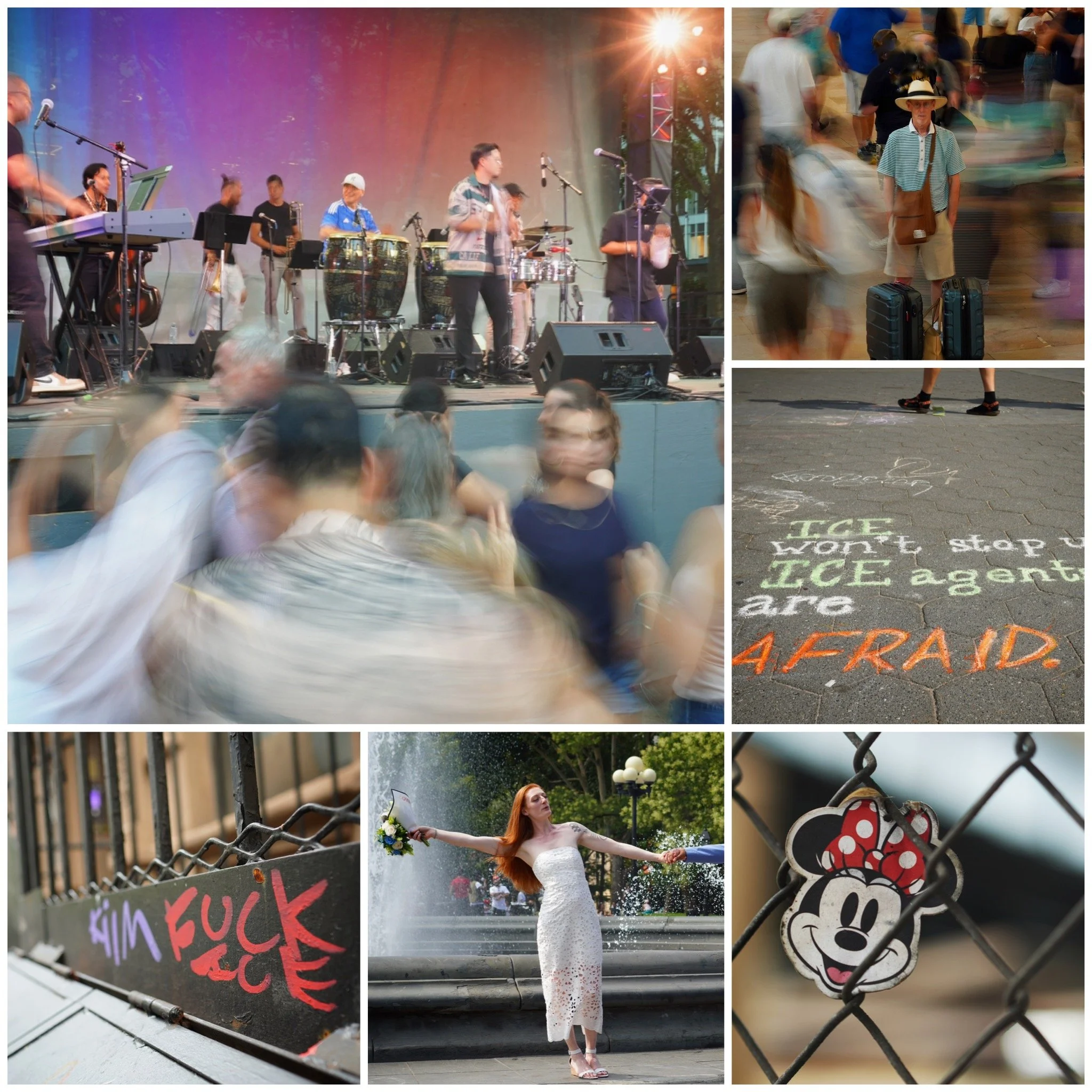
Trump’s Shadow Haunts New Yorkers - a photo essay
By Mark Desholm, PhD
My camera and I set out on a beneath-the-skin photographic journey through the wild city of progressive New Yorkers. The goal was to gain a deeper understanding of how the average American, living in what is arguably the most left-leaning bubble on the East Coast, is coping mentally after roughly a year spent under the shadow of Trump and the city’s towering buildings.
The experience turned out to be more unsettling than I had dared to expect. New Yorkers are not merely frustrated or angry; above all, they are afraid. The fear is rarely loud. Instead, it reveals itself in lowered voices, nervous glances, and a careful avoidance of names. The president is often referred to simply as “the situation” - a linguistic evasion that feels both protective and revealing.
At first glance, New York still looks like itself. The city remains radically diverse, open, and vibrantly alive. People still cross the marble floors of Grand Central in every possible direction. Streets and parks are still filled with chalk messages, slogans, and stickers - public opinions written directly into the city’s skin.
But something has shifted. The tone of these expressions has changed. Where provocation and humor once dominated, caution and warnings are now more common. Fear has become a visible part of the urban landscape, expressed through anonymous instructions, watchful advice, and quiet signals of resistance.
At the same time, life goes on. In the parks, couples dance salsa, kiss, get married, and sit close together in the grass. Friends and families gather, linger, and laugh. These moments do not seem oblivious to the surrounding tension. On the contrary, they appear almost deliberate - small, physical acts of insistence on presence in a climate marked by uncertainty.
As I moved through the city day after day, navigating between fear and intimacy, silence and expression, it struck me that it was not grand confrontations that defined the atmosphere, but rather a kind of persistence. People go to work, cross bridges, sit on benches, watch their children, and stand still, gazing out over the river toward the skyline. The shadow is there - but so is the city - unfolding, day by day, through completely ordinary movements.